Address
Zhejiang Province Ningbo City Yuyao City Zhengxiang Village, Xiatang Street
Address
Zhejiang Province Ningbo City Yuyao City Zhengxiang Village, Xiatang Street

Confused between dry electric wire and fluid-filled towel warmers? Discover heat-up time, leak prevention, freight costs, 500W power benchmark, and EU Lot 20 compliance from Ningbo Renowell.
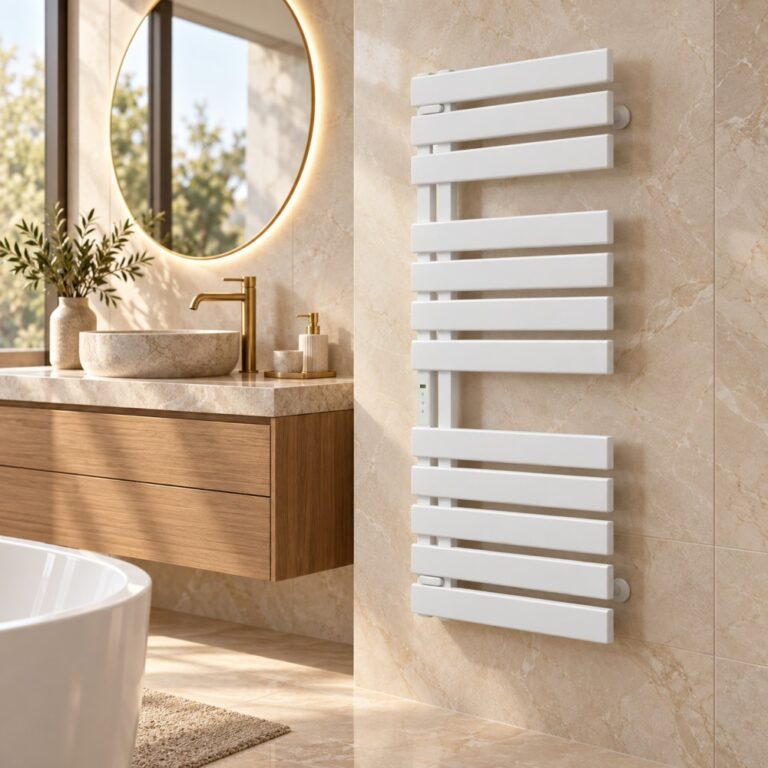
When sourcing electric heated towel rails for European and North American markets, one of the most critical engineering decisions is choosing between Dry Electric Wire (Heating Cable/Carbon Fiber) and Fluid-Filled (Liquid/Glycol with Heating Cartridge) technologies.
Both solutions dominate the modern bathroom heating sector, but they serve different distributor needs, installation environments, and retail price points. As a specialized OEM/ODM manufacturer with 16+ years of production experience in Ningbo, China, Ningbo Renowell Electric Appliance Co., Ltd. breaks down the technical, commercial, and regulatory differences to help global brands and distributors make the right procurement choice.
| Feature / Metric | Dry Electric Wire Towel Rail | Fluid-Filled (Liquid/Glycol) Towel Rail |
|---|---|---|
| Heating Medium | High-efficiency Alloy Heating Wire / Carbon Fiber | Thermal transfer fluid (distilled water + anti-freeze glycol) |
| Standard Power Output | 500W standard benchmark (300W – 600W available) | 500W standard benchmark (400W – 1000W available) |
| Heat-up Time | Fast: 3 – 5 minutes to reach operating temp | Moderate: 15 – 30 minutes to warm full volume |
| Heat Retention | Low (cools down shortly after shut-off) | High (retains heat for 30–45 mins after power-off) |
| Leakage Risk | Zero Risk (completely dry, solid-state) | Requires precision robotic welding & 1.2 MPa seal testing |
| Unit Weight | Lightweight (approx. 2.5 – 5.0 kg) | Heavy (approx. 6.5 – 12.0 kg with liquid fill) |
| Freight & Logistics | Lower freight cost per container (~30% more load volume) | Higher shipping weight, strict anti-freezing packaging needed |
| Primary Purpose | Fast towel drying, sanitization & ambient warming | Room primary space heating + towel drying |
| EU Ecodesign Lot 20 | Seamless compliance with digital timer & open-window sensor | Requires certified Lot 20 electronic heating cartridge |
| Target Retail Channel | DIY chains, e-commerce, modern residential apartments | HVAC wholesalers, renovation contractors, traditional plumbing |
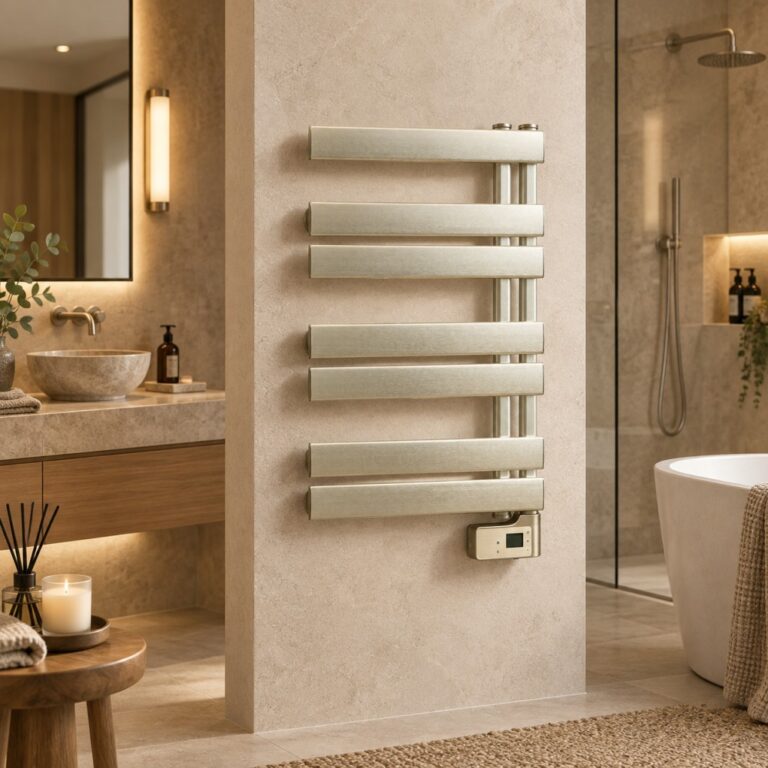
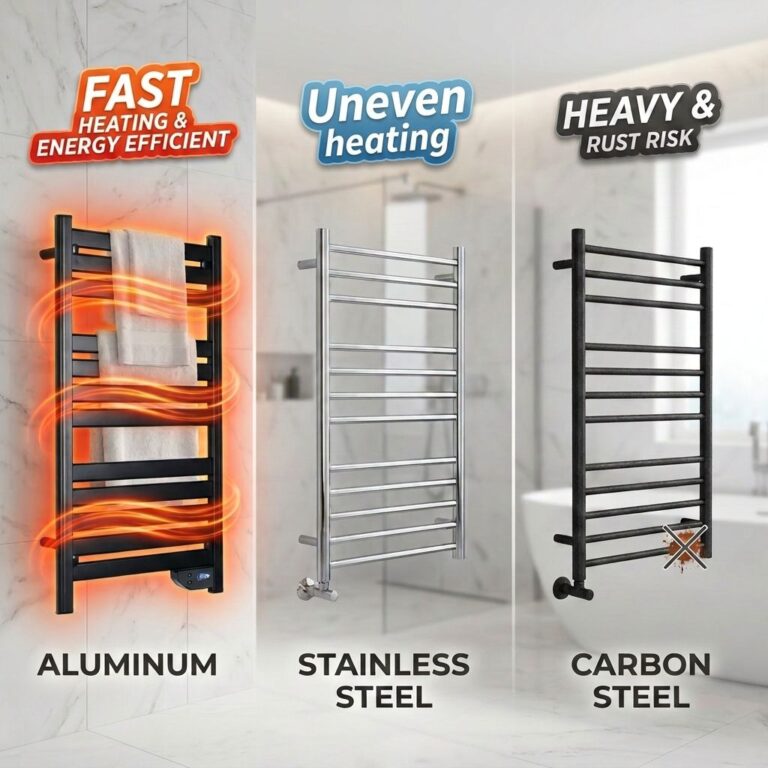
Dry electric towel warmers utilize integrated silicon-coated heating cables or carbon fiber elements routed internally through precision stainless steel or extruded aluminum tubes.
Fluid-filled rails use a heating cartridge immersed in a factory-sealed mix of water and food-grade glycol, circulating warmth through natural thermal convection.
In modern European residential heating, 500W has emerged as the universal sweet spot for electric towel rails:
Distributing heating appliances in Europe requires strict adherence to seasonal energy efficiency and electrical safety directives:
All Renowell towel warmers are fully tested and certified by TÜV / Intertek with CE, GS, RoHS, EMC, and ERP Lot 20 documentation available for immediate buyer verification.
At Ningbo Renowell, we provide full private-label manufacturing solutions tailored for brand distributors and project developers:
Q1: Can a 500W dry electric towel rail warm a full bathroom?
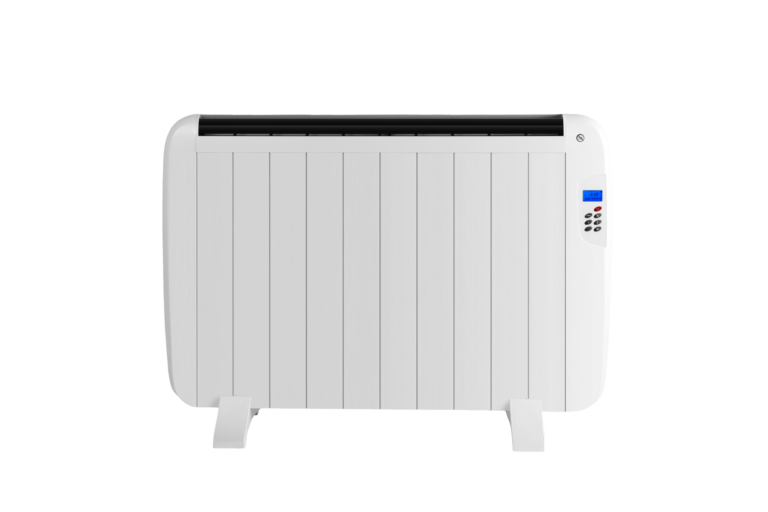
A1: A 500W dry electric rail provides substantial auxiliary heating for bathrooms up to 6 m². For larger bathrooms or cold climates, we recommend our 500W fluid-filled models or pairing with a Renowell convector panel heater.
Q2: Will the liquid inside fluid-filled rails freeze during winter sea transit?
A2: No. Renowell uses an industrial anti-freeze glycol formulation certified to -25°C, ensuring absolute integrity during freezing sea freight transit and unheated winter warehouse storage.
Q3: How does Renowell support custom OEM packaging for Amazon or mail-order retailers?
A3: We supply ISTA-1A drop-test approved honeycomb drop-proof cartons, custom multilingual instruction manuals, and barcode labeling ready for FBA or retail distribution.
Whether you are expanding an e-commerce catalog with lightweight dry towel rails or supplying high-output fluid radiators for architectural projects, Renowell delivers certified factory pricing with European quality standards.
Direct Engineering & Sourcing Inquiries:
• Freya Shi (Sales): freya@renowelltech.com | Tel/WhatsApp: +86-15858263879
• Joy Zheng (Product): zhengxingzhang@renowelltech.com | Tel/WhatsApp: +86-18067533839
• Factory Address: Zhengxiang Village, Xiatang Street, Yuyao City, Ningbo, Zhejiang Province, 315400, China